BenzUnited Parts
650 9650 Arctic White Calcite Cirrus Mercedes Touch Up Paint & Repair Kit
650 9650 Arctic White Calcite Cirrus Mercedes Touch Up Paint & Repair Kit
Couldn't load pickup availability
Mercedes-Benz Arctic White Touch-Up Paint – 650 / 9650
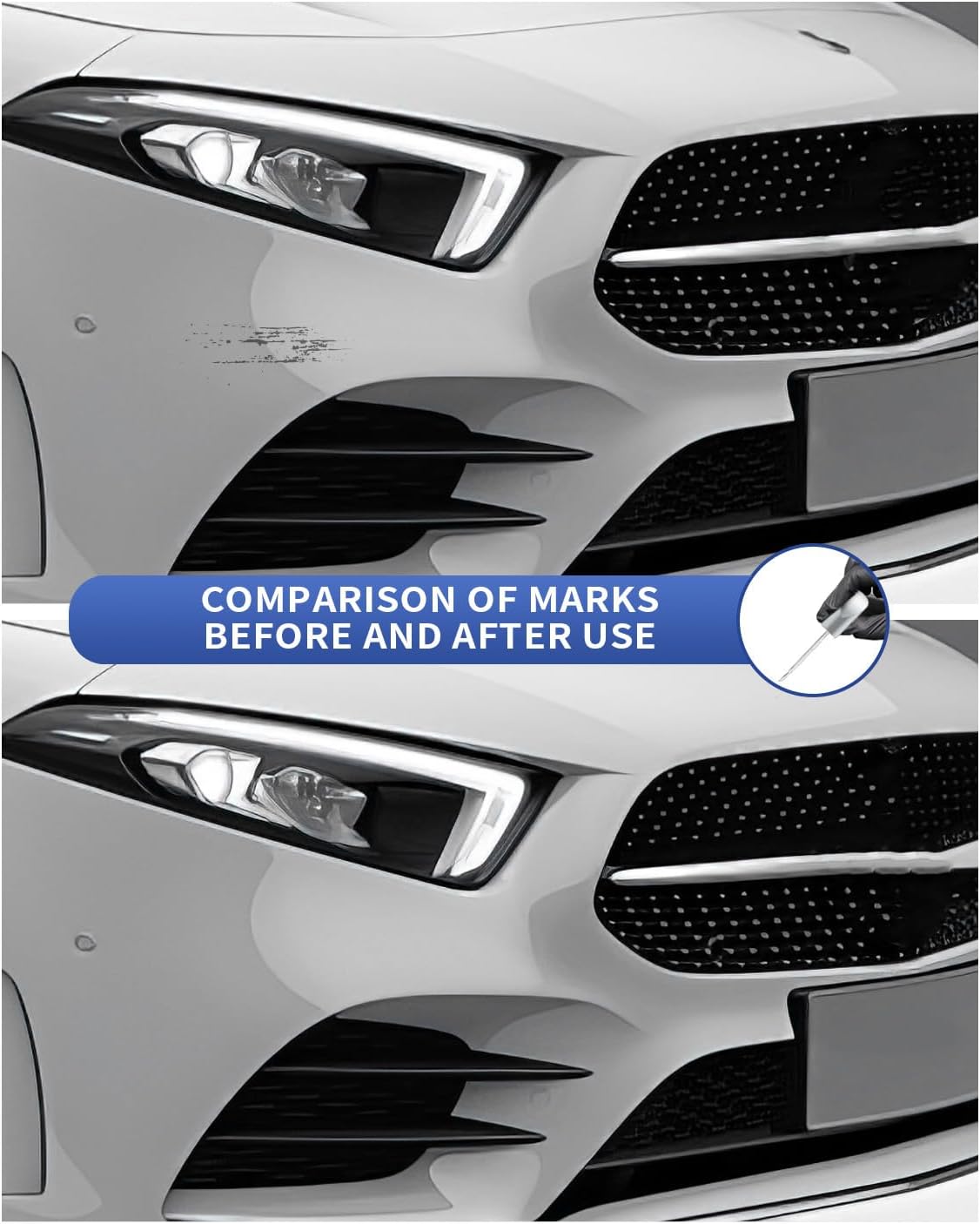
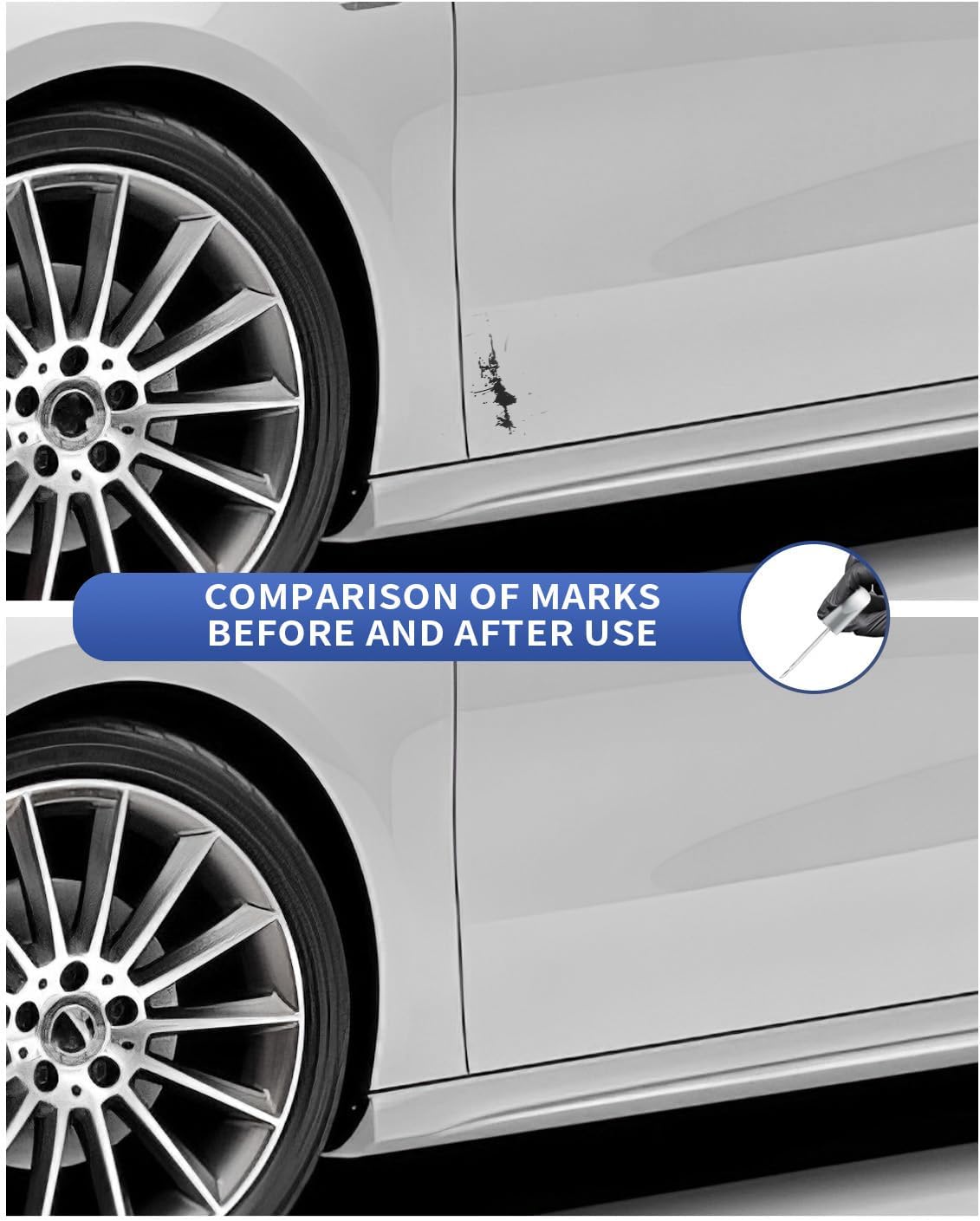
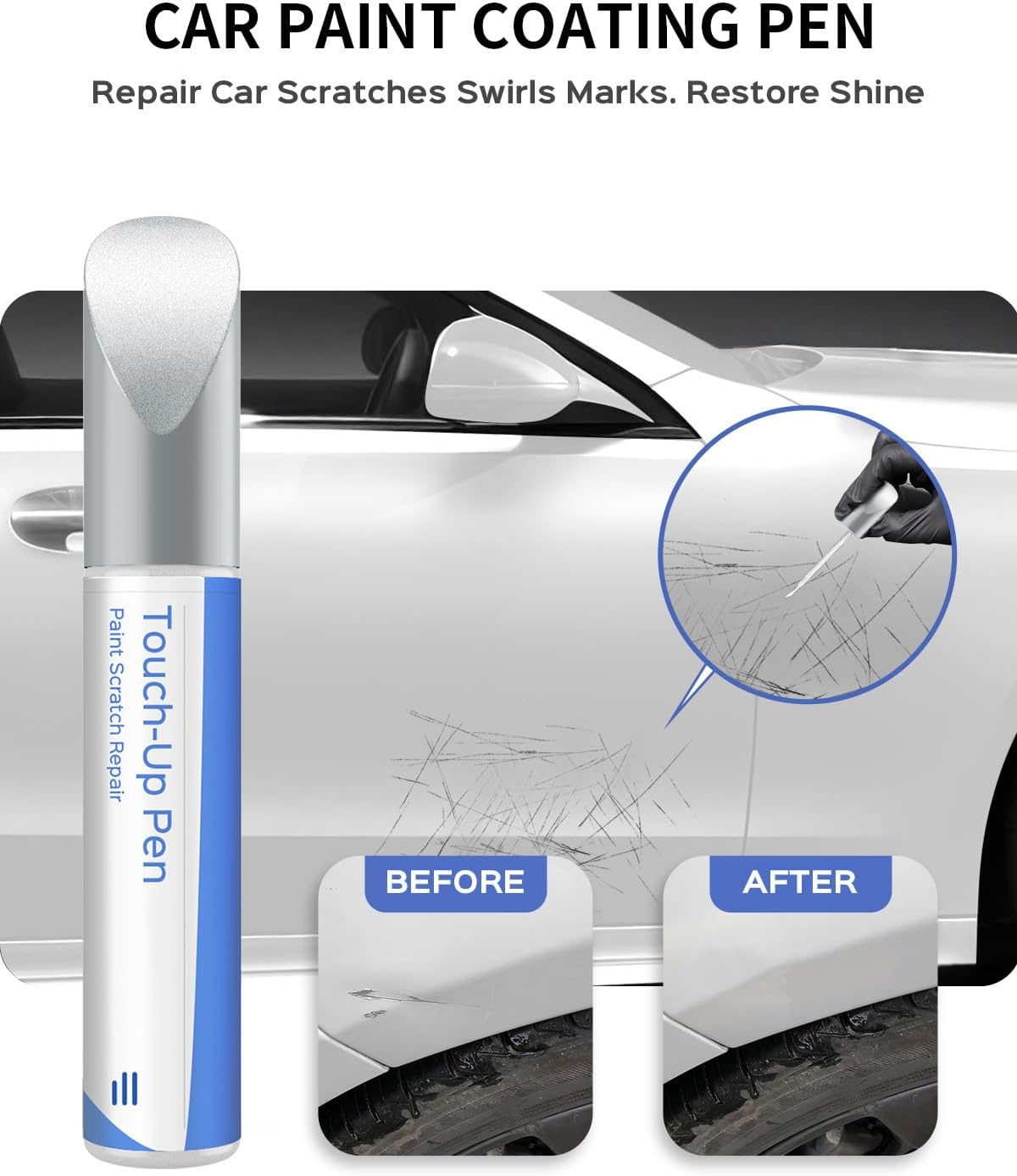
Arctic White is Mercedes-Benz paint code 650, also written 9650, a solid non-metallic white that Mercedes has sold under three names across the same code — Calcite White, Cirrus White and Arctic White. Each bottle holds 0.41 fl oz of exact-match paint for rock chips, door-edge scratches and small blemishes. Choose the paint on its own, or the complete repair kit — the kit adds body putty, a spatula, a sanding pad and four sheets of sandpaper, and gives a flatter, cleaner result than paint alone.
Confirm Your Paint Code First
The paint code is printed on a sticker, most often on the driver-side door jamb, and on many cars also under the hood. This paint is 650 — the sticker should read 650 or 9650.
The name is where people get caught out, not the number. Mercedes recorded this same code as Calcite White and Cirrus White through most of its run, and as Arctic White on the later cars, so your paperwork, your dealer and your door jamb may not all use the same word. The number is the part that does not move.
Worth reading it properly rather than going by eye. On a solid non-metallic finish there is no metallic flake to hide the edge of a repair, so a near-miss shows badly. Thirty seconds at the door jamb beats a repair you have to sand back off.
What’s Included
Paint Only
- 1 × Arctic White 650 / 9650 touch-up paint, 0.41 fl oz
Complete Repair Kit — recommended
- 1 × Arctic White 650 / 9650 touch-up paint, 0.41 fl oz
- 1 × body putty
- 1 × application spatula
- 1 × sanding pad
- 4 × sandpaper sheets
Paint covers the damage. Prepping and levelling first is what makes the repair disappear instead of sitting proud of the panel. For the best finish, take the kit.
Specifications
| Paint code | 650 / 9650 |
| Color name | Arctic White — also sold as Calcite White and Cirrus White |
| Finish | Solid, non-metallic |
| Volume | 0.41 fl oz — same in both options |
| Contents | Color coat only — no clearcoat included |
| Applicator | Twist-cap bottle with fine brush |
| Vehicle make | Mercedes-Benz |
Which Mercedes Use Arctic White
Code 650 ran across the Mercedes range from the mid-2000s into the late 2010s — sedans, coupes, wagons, the SUV range and the compact models. The name moved with the years rather than with the car: the earlier part of the run is usually recorded as Calcite White or Cirrus White, and the later compact models as Arctic White. Same code, same paint.
Which is why a model list would not narrow anything down for you. A large share of the lineup was available in this color across that period, and most cars of any given model left the factory in something else. Your door jamb sticker is the only thing that settles it.
How to Apply
With the paint alone
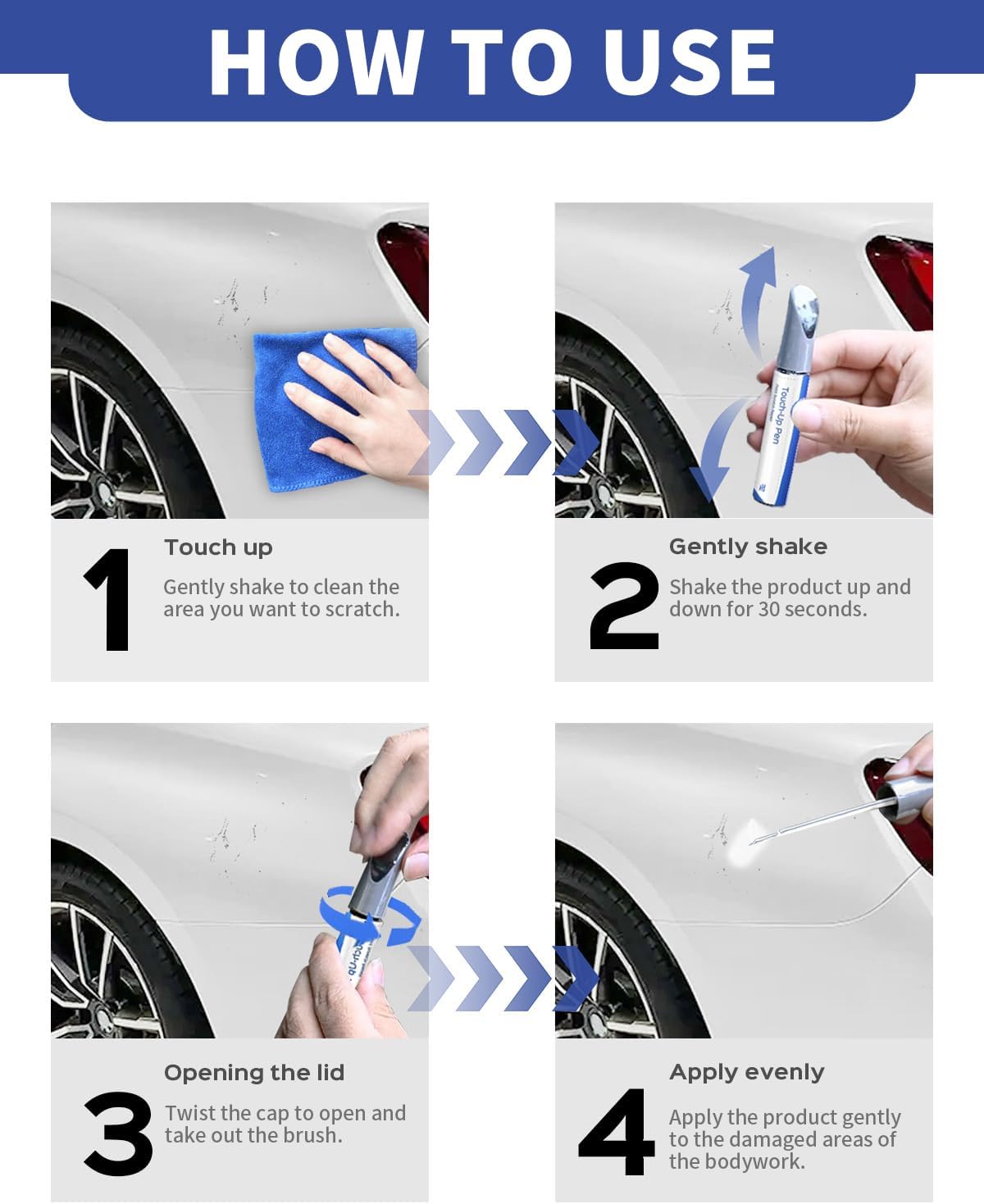
- Wash and dry the area. Car soap and water, rinsed, then dried completely. Paint will not bond through road film.
- Clean inside the chip. Wipe it with isopropyl alcohol or a wax and grease remover on a lint-free cloth. Wax and polish collect in the bottom of a chip where washing never reaches, and that residue is the most common reason a touch-up lifts months later. Let the solvent flash off completely before going further.
- Pick away loose edges. If paint is flaking around the rim, lift it with a toothpick. Paint over a loose edge and the repair fails at that edge.
- Shake until you hear the mixing ball move. Thirty seconds is usually enough. Then twist the cap open and work the first paint out onto a piece of card until the brush flows evenly. Never load the brush over the car — the first stroke usually floods.
- Dab, don’t drag. Touch the brush to the centre of the chip and let the paint flow outward on its own. Dragging it like a marker leaves ridges and pulls color onto the good paint around the chip. On very small chips, transfer a bead onto a toothpick and place it instead.
- Build thin layers, stopping just below flush. Several thin coats beat one thick one. Finish a fraction below the surrounding surface rather than above it — a shallow dip catches far less light than a raised blob, and the blob is what makes a repair obvious from ten feet away.
- Leave at least 4 hours between coats.
Work in shade on a cool panel, ideally between 50°F and 90°F and out of direct sun. Hot metal flashes the solvent off too fast and leaves a rough, textured edge.
With the complete kit — for the best finish
- Wash and dry the area, then clean it with isopropyl alcohol or wax and grease remover.
- Sand the damage back with the coarser sandpaper to remove loose paint and feather the edges.
- Press body putty into the low spot with the spatula rather than piling it on top. Let it set.
- Sand level, finishing with the pad so the repair sits flush. Check by running a fingertip across it — your finger finds a step your eye misses.
- Clean the area again and let it dry completely.
- Shake until you hear the mixing ball move, work the brush out on card, then dab color into the repair in thin coats.
- Leave at least 4 hours between coats.
Drying & Curing
- Touch dry in roughly 30 minutes
- At least 4 hours between coats
- Leave 24 hours before washing the car
- No wax, polish or automatic car wash for about 30 days while the paint hardens fully
Typical for solvent-based touch-up paint. Cold or humid conditions extend all of it.
Shipping & Returns
- Free shipping.
- Ships within 1 business day.
- 30-day returns on unused, unopened items.